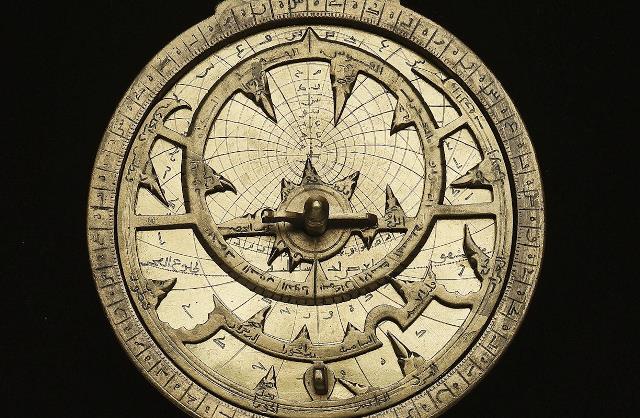
With Leap Year and daylight savings time appearing within a few weeks of each other, I just had to explore 'time' as a subject.

Deep within our history, the beginning of our 'time concept' began. The very first people who populated this earth used the stars in the sky. From these they determined when it was time to move. Being hunter gatherers they depended on nature to guide their days, nights and movements.

'Water clocks' were among the earliest time keeping devices that didn't use the observation of the stars. The ancient Greeks, it is believed, began using water clocks around 325 BC. They were also used, in various forms, by other countries such as Egypt and Japan.

In 1656, 'Christian Huygens' (a Dutch scientist) made the first 'Pendulum clock with a mechanism using a 'natural' period of oscillation. Galileo is credited in most historical books for the invention of the pendulum as early as 1582 but his design, shown above, was not built before his death. Huygens' clock, when built, had an error of 'less than only one minute a day'. A fantastic 'leap' for timekeeping.
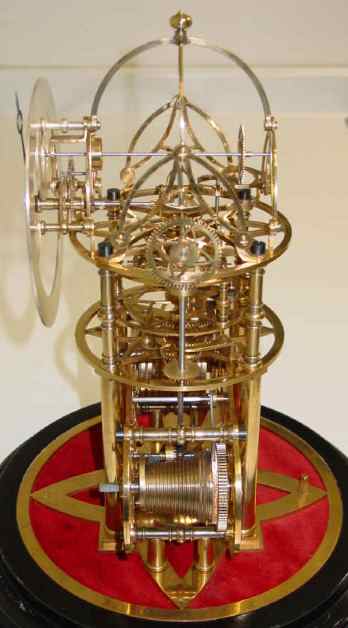
Later on came the spring assembly. This brought a much 'truer' technique of keeping time.

Oh how I loved to look at my grandfather's pocket watch. It would be considered an antique today, but to take off the back and watch it mark the seconds and minutes with with its little gears was an adventure to a young girl.

For the most part, today our clocks and watches are digital. I'm sure they keep much better time than those that required a clear night sky, water, pendulums and little gears and springs. But somehow along the way,the mystery and wonder of 'time' as an essence, has faded into the past. Did it not seem a bit more precious when we had to wind our watches? When it was not a thing to be manipulated as it is today?

As I reset our household clocks for Daylight Savings Time I will question our tinkering with time. And our apparent quest to 'tame' it to our own desires.
"By putting forward the hands of the clock you shall not advance the hour." - Victor Hugo


